Nature has a sense of shape
Some foods resemble parts of the human body. The resemblance may seem poetic, but their nourishment and healing powers are real.
Long before laboratories and nutrition labels, people studied nature with attention and wonder. A sliced carrot looked like an eye. A walnut resembled a tiny brain. These similarities are fascinating, but the real story lies inside the food: its vitamins, minerals, fiber, natural oils, and protective plant compounds.
Nature has a sense of shape www.rajeherbal.com
ONIONS — Layers of cellular nourishment
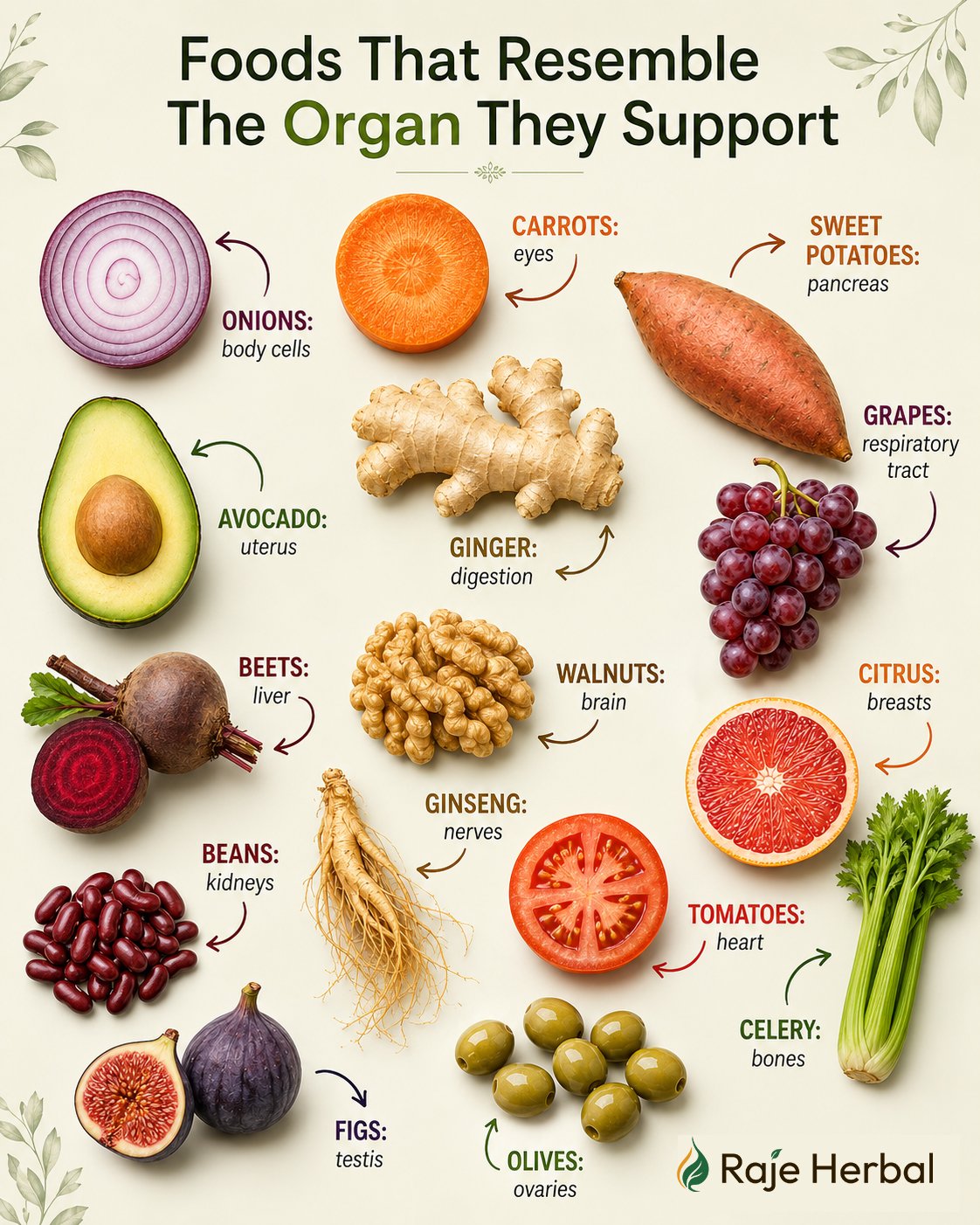
An onion’s rings may remind us of the many layers and structures within the body. Onions contain quercetin and natural sulphur compounds that have been studied for their antioxidant activity and their ability to help protect cells from oxidative stress.
CARROTS — Supporting normal vision
A sliced carrot may look like an eye, but its real benefit comes from beta-carotene. The body converts beta-carotene into vitamin A, which is essential for normal vision, especially in low light. Carrots help maintain healthy vision; they do not give someone “super eyesight.”
SWEET POTATOES — Gentle, fibre-rich energy
The shape may suggest the pancreas, but sweet potatoes do not just treat pancreatic disease or diabetes. They offer fibre, carotenoids, and complex carbohydrates that can be part of a balanced diet supporting normal energy and metabolic health.
AVOCADO — Nourishment for women and pregnancy
The avocado’s shape is often compared with the uterus. Its more meaningful connection is nutritional: avocado provides folate, potassium, healthy fats, vitamin E, and lutein. Folate is especially important for normal cell division and healthy development during pregnancy, though avocado is not a treatment for the uterus or fertility.
GINGER — An ancient friend of digestion
Ayurveda has long valued fresh ginger and its dried version as warming digestive ingredients that support the body’s digestive capacity. Modern research is strongest for ginger’s ability to ease certain kinds of nausea; evidence for other digestive conditions is still developing.
GRAPES — Juicy sources of plant polyphenols
A cluster of grapes may resemble the branching airways of the lungs. Grapes contain flavonoids, resveratrol, and other polyphenols with antioxidant properties. Some early research connects fruit polyphenols with lung function, but there is not enough evidence to say that grapes specifically heal or protect the respiratory tract.
BEETS — Colourful support for circulation
Beets are sometimes linked visually with the liver, but “liver detox” may not be their strongest scientific story. Beetroot contains natural nitrates that the body can use to make nitric oxide, helping blood vessels relax and supporting healthy circulation. Its red betalain pigments also have antioxidant properties.
WALNUTS — Good fats for the brain and heart
The walnut’s folds look uncannily like the brain. Walnuts provide alpha-linolenic acid, a plant-based omega-3 fat, along with fibre and polyphenols. These nutrients support cardiovascular health, which also matters for the brain, although direct claims about improving memory or preventing dementia remain unproven.
CITRUS — Vitamin C for connective tissue
The inner pattern of citrus fruit may suggest breast tissue, but citrus is not a breast-specific food. More research maybe needed. Oranges, lemons, and grapefruit provide vitamin C, which the body needs to make collagen, support immune function, absorb plant-based iron, and protect cells from oxidative damage.
BEANS — Fibre and plant-based protein
Kidney beans resemble human kidneys. Beans offer plant protein and generous amounts of fibre that support digestive, metabolic, and cardiovascular health.
GINSENG — Traditionally used for energy and resilience
Ginseng roots may resemble branching nerves, but ginseng belongs mainly to East Asian herbal traditions rather than classical Ayurveda. Small studies suggest possible effects on fatigue, attention, and cognitive performance, but results are mixed. Ginseng can also interact with medicines, so it should not be only presented as a simple “nerve cure.”
TOMATOES — A heart-friendly color
A tomato’s red color and inner chambers naturally bring the heart to mind. Tomatoes contain lycopene and other plant compounds that have been associated with cardiovascular health, although clinical findings are not completely consistent. They work best as part of an overall heart-conscious eating pattern, not as a treatment by themselves.
CELERY — One small part of bone nutrition
The long, firm stalks of celery may resemble bones. Celery contributes water, fibre, and some vitamin K, a nutrient involved in proteins used in normal bone metabolism. Still, strong bones require a much broader foundation, including adequate protein, calcium, vitamin D, movement, and sunlight.
FIGS — Ancient, fibre-rich nourishment
Figs have traditionally been valued as nourishing fruits and gentle support for bowel regularity. They provide fibre, minerals, and polyphenols. Studies exploring reproductive effects are mostly preliminary, so there is not enough human evidence to claim that figs specifically support the testes or improve fertility. More research maybe needed.
OLIVES — Traditional fats for whole-body health
Olives may resemble ovaries, but their best-supported benefits are not ovary-specific. Olives and olive oil provide monounsaturated fats and polyphenols and are central to the Mediterranean eating pattern, which is associated with cardiovascular and metabolic wellbeing. Research into women’s reproductive health is promising but not yet strong enough for a direct claim.
Nature is not a shortcut. It Is a relationship.
These foods do not act like medicines aimed at one isolated organ. They nourish interconnected systems: digestion affects immunity, circulation supports the brain, and healthy cells help every part of the body. Ayurveda understood health in much the same way but as an integrated whole body with a living balance of food, movement, rest, environment, and state of mind.
The Raje Herbal Way
At Raje Herbal, we respect nature without exaggerating it. We bring botanical wisdom into thoughtful, small-batch rituals for skin and hair, guided by tradition, sensory pleasure, careful formulation, and honest communication.
No miracle language. No fear-based beauty. Just natural care made with patience, intention, and the belief that everyday wellbeing should feel less like a task and more like a loving ritual. Check out https://rajeherbal.com/